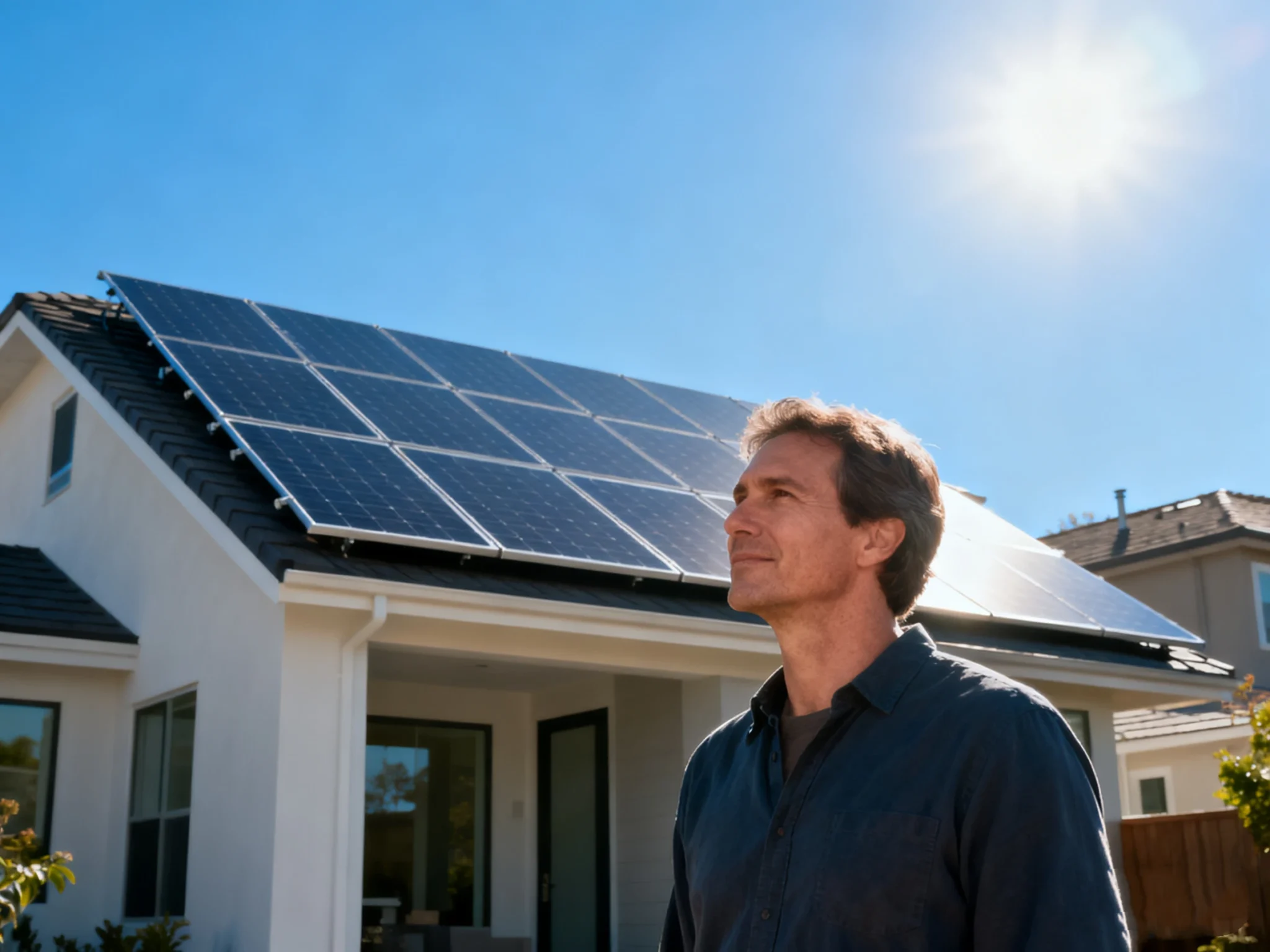
The Advisory Approach
Why independent solar advice matters in Ontario
The Ontario solar market is dominated by installer-salespeople whose job is to close a contract. That creates a structural problem: there is no financial incentive to tell a homeowner their roof orientation is wrong, their energy consumption is too low, or their money would return more savings through insulation first.
We separate the advisory from the installation entirely. We evaluate your home's solar potential using metered consumption data, roof assessment, shading analysis, and Ontario's net metering rates before recommending anything — and before introducing you to an installer.
Is solar worth it in Ontario?
For some homes, yes. For others, not yet. The honest answer depends on four factors specific to your property.
Roof orientation and pitch. A south-facing roof at 30–45 degrees is ideal. East or west-facing roofs produce 15–25% less generation. North-facing roofs rarely make sense economically.
Shading. Shade from trees, neighbouring buildings, chimneys, or dormers can reduce output dramatically. A single shaded panel in a traditional string inverter system drags down the entire array. Micro-inverters or DC optimizers mitigate this but add cost.
Your electricity consumption. Solar only returns value when you're offsetting hydro costs. If you've recently electrified heating with a heat pump — which we typically advise before solar — your consumption base for offsetting is much larger and the payback improves materially.
Net metering rates. Under Ontario's net metering program, surplus solar generation earns a bill credit at the retail rate you pay. This is more favourable than some other provinces but the math still requires a sufficient base load to offset.
Insulation first, solar second
This is one of the most important sequencing decisions Ontario homeowners miss. Installing a larger solar array to power an inefficient home costs significantly more than tightening the envelope first and sizing the system to match the lower consumption. We model both paths and show you the difference in writing.
Solar system types in Ontario
Grid-tied systems are the most common residential option. Your solar array connects to the grid through a net meter — you draw from the grid when your panels produce less than you consume (nights, cloudy days), and bank credits when they produce more. There is no energy storage; the grid is your "battery."
Grid-tied with battery storage adds a home battery system (most commonly a Tesla Powerwall or similar lithium-ion storage unit) to a grid-tied setup. This provides backup power during outages and can enable time-of-use rate optimization. Batteries add $8,000–$15,000 to a system's cost and extend payback by 3–5 years in most Ontario scenarios. The business case is strongest for homes with time-of-use rates and high peak consumption, or those in areas with frequent outages.
Off-grid systems are rarely economically practical for grid-connected Ontario properties. They require oversized arrays and large battery banks to handle winter demand. We discourage this path for urban and suburban properties unless grid connection is genuinely impractical.
What does a solar system cost in Ontario?
| System Size | Typical Home | Installed Cost | Annual Production |
|---|
| 5 kW | 1,200–1,600 sq ft | $12,000–$16,000 | 5,500–6,500 kWh |
| 7 kW | 1,600–2,200 sq ft | $16,000–$21,000 | 7,500–9,000 kWh |
| 10 kW | 2,200–3,000 sq ft | $22,000–$28,000 | 11,000–13,000 kWh |
| +Battery | Add 10–13 kWh storage | Add $8,000–$15,000 | n/a (storage) |
Costs vary by equipment brand, roof complexity, electrical panel upgrade requirements, and installer. These ranges reflect Ontario installations with standard equipment. We obtain competitive quotes from multiple vetted installers for every client.
Ontario solar incentives and rebates
There is currently no provincial solar rebate program in Ontario. The federal investment tax credit available in some contexts does not directly apply to most residential solar in Canada in the same way as U.S. programs. However, several financing programs can reduce the capital outlay: the Canada Greener Homes Loan can cover up to $40,000 interest-free and includes solar as an eligible measure. Some utilities also offer financing or incentive programs — we review current availability as part of every solar consultation.
For the most current federal information, see Natural Resources Canada on solar energy and the DSIRE database for cross-border incentive context.
Battery storage: is it worth it in Ontario?
The short answer is: for most Ontario homeowners, battery storage does not significantly improve solar payback on its own. Net metering already gives you effective "storage" through the grid. Where batteries add clear value is in homes with time-of-use rates (where peak electricity costs significantly more), homes that experience frequent grid outages, and homes with EV charging needs that benefit from load shifting.
We model the battery ROI separately from the solar ROI in every assessment. If the numbers support it for your situation, we'll show you exactly why.